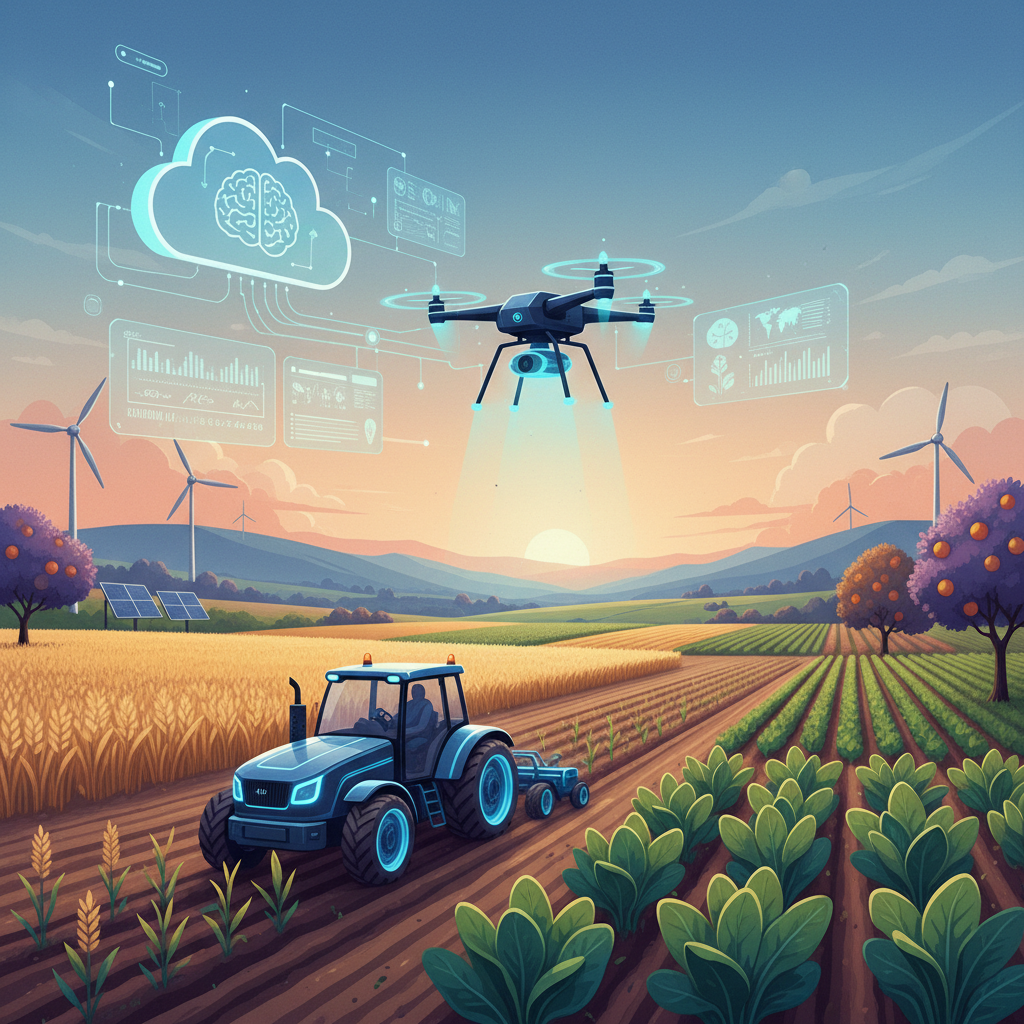
Traditional farming relies on intuition. You’ve heard this for decades. It’s not necessarily a bad thing, but it’s no longer enough to feed a planet of eight billion people. Relying solely on historical patterns in a changing climate is a gamble you can’t afford. The world needs more than just hard work. It requires AI for agriculture to bridge the gap between dwindling resources and rising food demands. Efficiency is the new currency. And data is the seed of the next green revolution.
Modern growers face a brutal reality. Costs for fuel, fertilizer, and labor are climbing every single season. You’re expected to produce more with less while meeting stricter environmental standards. This isn’t just a challenge. It’s a systemic shift. Digital agriculture intelligence provides the clarity needed to navigate these pressures. It turns guesswork into precision. It transforms a field of crops into a network of data points that tell a story of health, growth, and survival. You’re not just a farmer anymore. You’re a data manager.
How Does Digital Agriculture Intelligence Transform Modern Farming?
Data science is the engine. It’s the core of how AI for agriculture functions today. By integrating massive datasets from satellites, soil sensors, and historical yield records, AI driven crop advisory services offer a level of foresight previously impossible. You can now see the invisible. You can predict the outcome of a harvest months before the first combine enters the field. These systems analyze patterns that the human eye simply misses. They find the signal in the noise.
Yield predictability used to be a dream. But it’s now a standard feature of digital agriculture intelligence. Algorithms process variables like soil moisture, sunlight hours, and nutrient levels to calculate exact production targets. If a specific acre is underperforming, the system flags it immediately. You don’t have to wait for the crop to wither. You act before the damage is done. This proactive approach saves money. It protects your bottom line.
Operations become streamlined. And your team works smarter. Instead of scouting every square inch of a thousand-acre property, you go where the data points. AI driven crop advisory services prioritize your tasks based on urgency and potential ROI. You spend your hours on high-impact zones. The rest of the field takes care of itself through automated monitoring. This is the definition of optimization. It’s the future of field management.
What Are the Benefits of AI for Precision Irrigation and Fertilization?
Waste is the enemy. Every drop of water and every gram of nitrogen represents a cost that can’t be recovered if it’s misplaced. AI for precision irrigation and fertilization solves this by applying inputs only where they’re needed. It’s a surgical approach to farming. Sensors buried in the soil communicate directly with your irrigation system. They tell the valves when to open. They tell them when to shut. No water is wasted on saturated ground.
Environmental impact is a growing concern for regulators. And it’s a concern for your community. Excessive fertilizer runoff poisons local waterways and degrades soil health over time. Using AI for agriculture allows you to apply nutrients at a variable rate. The machine knows which parts of the row are hungry. It knows which parts are full. You reduce your chemical footprint. You keep your soil productive for the next generation.
The savings are substantial. According to recent World Bank data, precision systems can reduce water usage by up to 30 percent. Fertilizer costs can drop by 20 percent or more. These aren’t just small wins. They’re massive boosts to your yearly profitability. AI for precision irrigation and fertilization pays for itself through sheer efficiency. You stop spending on what you don’t need. You start investing in what works.
How Does Drone-Based Crop Monitoring Work?
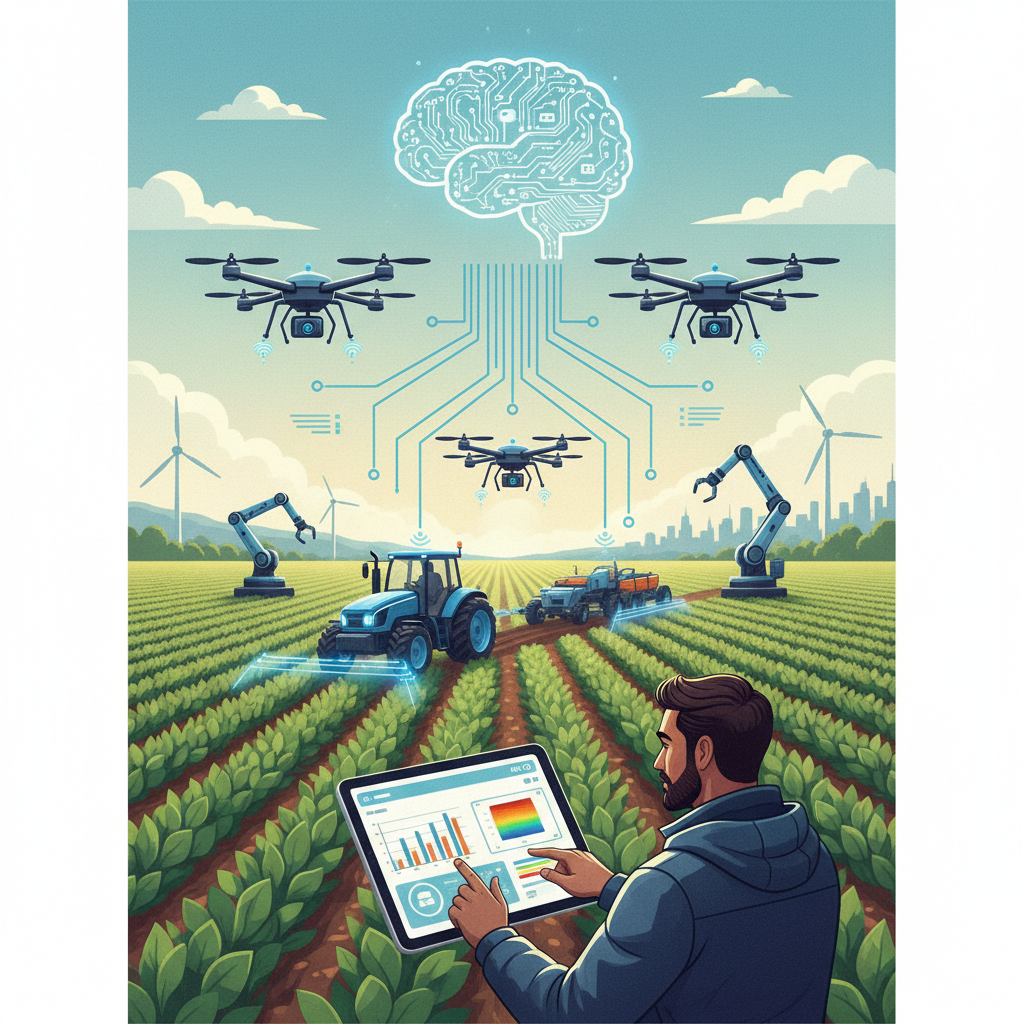
The view from the ground is limited. You can only see what’s right in front of you. Drone-based crop monitoring gives you the ultimate vantage point. These aren’t just flying cameras. They are sophisticated scientific instruments. They carry multispectral sensors that see light beyond the human range. They detect stress in plants before the leaves even turn yellow. This early warning system is your best defense against disaster.
Pest detection is now a digital task. And it’s faster than ever. AI for agriculture analyzes the imagery captured by drones to identify specific insect damage patterns. If a swarm is moving into your north section, you’ll know by lunch. You can deploy targeted treatments instead of spraying the entire farm. This saves time. It keeps your crops cleaner. It protects the beneficial insects that help your ecosystem thrive.
Nitrogen mapping is another vital feature. Drones create high-resolution maps of chlorophyll levels across your entire acreage. You can see exactly where the plants are struggling to find nutrients. This data flows directly into your digital agriculture intelligence platform. It creates a prescription map for your equipment. Your machinery then follows that map to the letter. Every plant gets exactly what it needs to reach its full potential.
Is Autonomous Farm Equipment Ready for Large-Scale Adoption?
The driverless tractor is here. It’s no longer a prototype in a lab. Autonomous farm equipment is currently working in fields across the globe. These machines use computer vision and LiDAR to navigate. They see obstacles in total darkness. They maintain a straight line with sub-inch accuracy. This level of precision is impossible for even the most experienced human operator. It eliminates overlap. It reduces fuel consumption.
Labor shortages are a massive headache. But AI for agriculture offers a way out. One operator can now manage a fleet of three or four autonomous machines from a central tablet. You don’t need a person in every cab. You need a strategist in the command center. This shift allows you to run operations 24 hours a day during peak windows. You hit your planting and harvesting targets regardless of staff availability. It’s a game of scale.
Safety is the primary focus. Autonomous farm equipment is designed with multiple layers of redundancy. If a sensor fails, the machine stops. If an animal wanders into the path, the AI detects it and reroutes. These systems are becoming more reliable every year. They learn from every acre they cover. They get better at handling mud, dust, and uneven terrain. The barrier to entry is falling. The value is rising.
Utilizing AI Enabled Weather Forecasting for Crop Protection
Local weather is unpredictable. And global climate shifts are making it worse. AI enabled weather forecasting for crop protection goes beyond your local news report. It uses hyper-local data from on-farm stations and global satellite models. It predicts micro-climates on your specific property. If a frost is coming to the valley but not the ridge, you’ll know. You can take action to protect the vulnerable zones.
Extreme events are the biggest threat to your yield. Hail, flash floods, and heatwaves can destroy a season in hours. Predictive analytics give you a head start. You can accelerate a harvest before a storm hits. Or you can adjust your AI for precision irrigation and fertilization schedule to help plants survive a dry spell. Information is your shield. It’s how you mitigate risk in an unstable world.
How to Use Generative AI for Small Scale Farming?
Scale shouldn’t be a barrier. You don’t need a thousand acres to benefit from AI for agriculture. The GAIA project is proving that generative AI for agricultural advisories can help everyone. Small-scale producers can now access expert knowledge through a simple smartphone interface. You ask a question in your local language. The AI provides a detailed, scientifically sound answer. It’s like having an agronomist in your pocket.
Low-cost advice is a necessity. Many independent farmers can’t afford expensive consulting fees. But how to use generative AI for small scale farming is becoming a common skill. These tools provide localized advice on planting dates, pest management, and market prices. They translate complex research into simple steps. You get the benefit of global data tailored to your specific backyard. It levels the playing field.
The technology is accessible. And it’s getting better. Generative AI for agricultural advisories uses large language models that have been trained on decades of farming research. They don’t just repeat facts. They provide context. They help you understand the why behind the recommendation. This builds your knowledge. It makes you a more resilient producer over time. Knowledge is power.
Evaluating AI Chatbots for Farmer Advisory Services
Trust is everything. You can’t bet your livelihood on a hallucinating AI. Evaluating AI chatbots for farmer advisory services is a critical step in adoption. You need to know that the advice you receive is accurate. Frameworks like AI AgriBench are designed to test these systems. They measure accuracy against real-world agronomy standards. They ensure the AI isn’t just making things up. They provide a seal of quality.
Reliability is the benchmark. If a chatbot suggests a pesticide dosage, it must be correct. AI for agriculture is only useful if it’s dependable. Farmers are encouraged to use multiple sources. Compare the AI’s output with local government extensions. Check it against your own experience. As these models improve, their error rates are plummeting. But you must remain the final judge. You are the expert on your own land.
Future Steps: Implementing AI Systems in Your Field
Start with the basics. You don’t need to automate everything on day one. Begin by upgrading your digital agriculture intelligence through better data collection. Install a few soil sensors. Use a basic drone service. Get comfortable with the data. See how it aligns with what you’re seeing on the ground. Small steps lead to big changes. You build confidence as you go.
Infrastructure is the foundation. You need reliable connectivity across your fields. Without a signal, AI for agriculture can’t talk to your equipment. Look into mesh networks or satellite internet options. Ensure your power supply is stable. These systems require a different kind of maintenance than a tractor engine. You’re maintaining sensors and servers now. It’s a new kind of grease.
Skills must evolve. Your team needs to understand how to interact with these tools. This doesn’t mean everyone needs a computer science degree. But they do need to be tech-literate. Invest in training. Work with your equipment dealers. They often provide the support needed to get AI driven crop advisory services running smoothly. The technology is only as good as the people using it. Empower your workforce.
How Are AI-Driven Crop Advisory Services Revolutionizing Soil Health Management?
Soil is alive. It’s a complex ecosystem of microbes, minerals, and organic matter. Traditional NPK testing only scratches the surface. It tells you what’s there but not how it’s working. AI driven crop advisory services are changing the game. They analyze the biological activity in your dirt. They look at how nutrients move through the soil profile. This is deep-level management. It’s the key to long-term sustainability.
Real-time analysis is the new standard. You no longer send a sample to a lab and wait two weeks for a paper report. Advanced AI for agriculture platforms use spectroscopic sensors to scan soil in the field. They give you instant readings on carbon content and moisture. You can adjust your plan on the fly. If the soil is stressed, you stop. If it’s thriving, you push. You work with the land, not against it.
Integrating Soil Sensors with Predictive Analytics
Data needs context. A moisture reading is just a number until you compare it to the forecast. By integrating soil sensors with predictive analytics, you create a dynamic model of your field. The AI predicts how the soil will react to an upcoming heatwave. It tells you if your current nutrient levels are enough to sustain a growth spurt. You stay ahead of the curve. You avoid the crashes.
Predictive models also help with long-term planning. You can see how your soil health is trending over years, not just months. This allows you to make better decisions about crop rotation. You can see which crops are depleting the soil and which are rebuilding it. AI for agriculture turns your farm into a laboratory. You experiment with confidence. You grow with precision.
Leveraging AI for Regenerative Agriculture and Carbon Credit Verification
Carbon is the new crop. Companies are willing to pay you to keep carbon in the ground. But they need proof. Leveraging AI for regenerative agriculture and carbon credit verification provides that evidence. AI models use satellite data and ground sensors to calculate exactly how much carbon you’re sequestering. They create a transparent record. This opens up a new revenue stream for your farm. You get paid for being a good steward.
Regenerative practices become easier to manage. Transitioning to no-till or cover cropping is a risk. But AI for agriculture helps you manage that risk. It monitors the transition in real-time. It tells you if your soil health is improving as expected. It identifies the best cover crops for your specific climate. You’re not just guessing at sustainability. You’re proving it every single day.
What Role Does Generative AI Play in Navigating Complex Agricultural Regulations?
Red tape is thick. And it’s getting thicker every year. Farmers are buried in paperwork. You have to track pesticide application, water usage, and labor safety. Generative AI for agricultural advisories can help you navigate this maze. These tools can read through hundreds of pages of government regulations in seconds. They summarize the parts that apply to you. They tell you what you need to do to stay compliant. It’s a massive time-saver.
Interpretation is the hard part. Laws are often written in dense, legalistic language. But AI for agriculture can translate that jargon into plain English. It can answer specific questions about your eligibility for subsidies. It can tell you if a new environmental law will affect your planned expansion. You get clear answers without hiring a lawyer. You stay on the right side of the law. You protect your business.
Simplifying Compliance Reporting with Automated AI Documentation
Reporting is a chore. But it’s a mandatory one. AI for agriculture can automate much of this process. It pulls data directly from your equipment and sensors. It fills out the forms for you. It tracks your chemical applications with GPS precision. You just review and hit send. This reduces the chance of human error. It ensures your records are always up to date. You’re always ready for an audit.
Automation also improves accuracy. When a machine records the data, there’s no room for a typo. Your digital agriculture intelligence system keeps a permanent, unchangeable log of every action taken on the farm. This builds trust with regulators. It shows that you’re operating with full transparency. It makes the administrative side of farming much less painful. You get back to the field faster.
Using Generative AI to Optimize Grant Applications for Sustainable Farming
Money is available. Governments and private foundations are offering billions in grants for sustainable farming. But the application process is exhausting. AI for agriculture can help you find the right grants. It can even help you write the proposals. It uses your farm’s data to build a compelling case for why you deserve the funding. It highlights your carbon sequestration and water savings. It speaks the language of the grant-givers.
Optimization is the key. The AI knows what these organizations are looking for. It helps you tailor your application to meet their specific goals. This significantly increases your chances of success. You get the capital you need to invest in more autonomous farm equipment or better sensors. It’s a cycle of improvement. The technology helps you get the money to buy more technology. You grow your way into the future.
How Does Edge Computing Enhance AI Performance in Remote Farming Areas?
The cloud is far away. In many rural areas, the internet is slow or non-existent. This is a problem for AI for agriculture that needs to make split-second decisions. Edge computing is the solution. It puts the “brain” of the AI directly on the machine. The data is processed on the tractor or the drone. It doesn’t need to travel to a server in another state. This allows for real-time action. It makes AI viable in the most remote corners of the planet.
Latency can be deadly. If an autonomous harvester sees an obstacle, it can’t wait five seconds for the cloud to tell it to stop. It needs to stop now. Edge computing provides that zero-latency response. It makes the equipment safer and more reliable. You don’t have to worry about a dropped connection causing a crash. The machine is smart enough to handle itself. It’s independent.
Transitioning from Cloud to Edge AI for Zero-Latency Field Actions
Speed is everything. When you’re spraying weeds at ten miles per hour, the AI has milliseconds to identify the weed and trigger the nozzle. AI for agriculture at the edge makes this possible. The camera feeds data directly into an onboard processor. The processor makes the decision. The nozzle fires. This happens thousands of times a minute. It’s a level of performance that the cloud simply can’t match. You get results in real-time.
Field actions become more precise. Because the processing happens locally, you can use higher-resolution data. You don’t have to compress the images to send them over a weak cell signal. The AI sees more detail. It makes better choices. This is the next step in digital agriculture intelligence. It’s about moving the power to the point of impact. It’s about being fast and accurate simultaneously.
Private 5G and LoRaWAN: Powering AI in ‘Dead Zones’
Connectivity is a choice. You don’t have to wait for the big telecom companies to reach your farm. Many growers are installing their own networks. Private 5G and LoRaWAN are perfect for AI for agriculture. They provide a dedicated, secure signal across your entire property. You can connect thousands of sensors for a low cost. You own the network. You control the data. You eliminate the “dead zones.”
LoRaWAN is great for low-power sensors. It can send small bits of data over long distances for years on a single battery. 5G is for the heavy lifting. It handles the high-definition video feeds from your drone-based crop monitoring. Together, they create a complete communication blanket. Your farm becomes a smart grid. Every piece of equipment is always connected. You’re never in the dark.
Are Multi-Modal AI Systems the Answer to Pest and Disease Identification?
Vision isn’t everything. Sometimes a pest is hidden inside a stem or under a leaf. Multi-modal AI systems look at the problem from multiple angles. They combine visual data with other inputs like sound and smell. This is the cutting edge of AI for agriculture. It’s about creating a machine that senses the world as well as a human does. Or even better. It’s a total sensory approach to crop protection.
Early detection saves crops. By the time you see a fungus with your eyes, it’s often too late. But a multi-modal system might “smell” the chemical compounds the plant releases when it’s under attack. It might “hear” the specific vibration of an insect’s wings. This gives you a massive head start. You can quarantine a small area instead of losing a whole field. You stop the spread before it starts.
Synergizing Computer Vision with Acoustic AI Bio-Sensors
Insects have a signature. Every species of pest makes a unique sound when it moves or feeds. Acoustic AI bio-sensors can identify these sounds in the middle of a noisy field. When you combine this with computer vision, you get a powerful diagnostic tool. The AI hears a potential threat and then uses a drone to zoom in for a visual confirmation. It’s a double-check system. It’s highly accurate.
Bio-sensors are becoming more affordable. You can scatter them across your acreage like seeds. They act as a 24/7 security team for your crops. They never sleep. They never get bored. They provide a constant stream of data to your digital agriculture intelligence platform. You get a real-time map of pest activity. You know exactly what’s out there. You’re always prepared.
Predictive Pest Modeling Using Historical Migration Patterns
History repeats itself. Pests often follow the same migration routes and weather patterns year after year. AI for agriculture uses this historical data to predict future outbreaks. It looks at wind speeds, humidity, and temperature to see if the conditions are right for an invasion. It’s like a weather forecast for bugs. You get a warning weeks in advance. You can prepare your defenses.
Modeling also helps with long-term strategy. You can see how pest pressures are changing as the climate warms. You might decide to plant a different variety that’s more resistant to the pests that are moving into your area. AI driven crop advisory services help you make these big-picture decisions. You’re not just reacting to the present. You’re planning for the future. You’re staying one step ahead of the swarm.
Conclusion: Ready to Automate Your Farm Operations?
The ROI is clear. AI for agriculture isn’t a luxury. It’s a survival tool for the modern era. You save on inputs. You increase your yields. You reduce your stress. The transition takes work, but the rewards are permanent. You’re building a farm that is more resilient, more profitable, and more sustainable. This is how you secure your legacy. It’s how you feed the future.
The technology is ready. Autonomous farm equipment, drone-based crop monitoring, and generative AI for agricultural advisories are all within your reach. You don’t have to do it alone. There are experts ready to help you design a system that fits your specific needs. Don’t wait for the competition to pass you by. The digital age of farming has arrived. It’s time to lead.
Take the first step today. Audit your current data collection. Talk to a technology provider about AI for agriculture solutions. Start small, but start now. The sooner you begin, the sooner you’ll see the results in your harvest. Your land has a story to tell. Digital agriculture intelligence is how you finally hear it. Let’s get to work.